
Gordon Brown used an online speech to Our Scottish Future yesterday evening to argue that deeper cooperation between Scotland and the rest of the UK can turn Scotland from a power to a “super-power” in in key growth industries of the future.
Continue readingCOP shows Scotland can host the Cup
Scotland’s successful staging of COP26 should be used to power ahead the UK wide bid to host 2030 World Cup, the Our Scottish Future campaign says today.
Set up to back fresh ideas for cooperation across the UK, OSF is calling on the four governments of the UK to “put rocket-boosters” under the attempt to football’s biggest tournament.
It follows the commitment by Chancellor Rishi Sunak to invest £11m in a World Cup feasibility study in his November budget.
Today, Shadow Scottish Secretary Ian Murray offers his backing, saying that a successful bid would mean that “finally football can come to its true home – Scotland.”
Under the proposals, the four Home Nations plus the Republic of Ireland would come together to host the 2030 tournament, with matches being staged across the British Isles.
It is hoped that a successful bid would lead to the redevelopment of Hampden park which, along with Murrayfield, would be a potential venue for games held in Scotland.
Our Scottish Future’s campaigns director Eddie Barnes today says that the UK Government should use the COP26 event as evidence that all parts of the UK have the capacity and expertise to stage major global events.
He said: “The funding for a World Cup feasibility study by the Chancellor was a clear sign of our commitment in a joint World Cup bid. All four governments of the UK, plus Ireland, should show a united front in 2022 by giving their full backing to the bid too, and put rocket boosters under our plans.”
“A unique British Isles bid, bringing together five football associations, would be a model for the rest of the world to follow.”
“COP showed we have what it takes to host the Cup. The success of Glasgow in 2021 can be leveraged as evidence that Scotland and all parts of the UK can put on the greatest World Cup ever in 2030.”
Mr Murray said: “A successful home nations bid for the 2030 World Cup would be the biggest boost to Scottish football since the penalty shoot-out that sent us to Euro 2020.”
“During the Euros, both Hampden and Wembley played an important role in hosting some of the best matches of the tournament.
“Although it wasn’t perfect, COP26 showed that Glasgow, Scotland and UK can host the world.
“The Scottish and UK Governments should work together so that we can realise the dream of hosting the World Cup.
“And then finally, football can come to its true home – Scotland.”
Two Cheers for the Gove-ernor
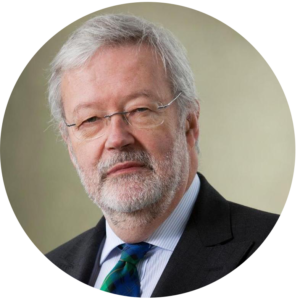
Professor Jim Gallagher
Professor Jim Gallagher is a Visiting Professor at University of Glasgow, Honorary Professor at St Andrews University and an Associate Member of Nuffield College, Oxford.
It’s good when the penny finally drops, even years late. Mr Michael Gove has at last realised the people in England want government closer to them, and not distant and ineffective in Whitehall. He wants them to elect governors. This time, he’s got at least something right. Perhaps he’s been listening to experts.
People all across the towns and cities of northern England feel left behind and not listened to. They are right. England is the most geographically unequal and politically centralised country in Europe. They see the unacceptable economic inequality between North and South, and they distrust London government. That’s probably why many of them voted for Brexit, though their real beef was with London, not Brussels.
It’s no accident over-centralisation in London and economic injustice in the North go together. The regions of England have had no one to stand up for them politically, as power has become more and more centralised.
The UK’s central government and parliament is the least trusted in Europe, and it’s been getting worse. Maybe not surprising. But we know that people in England, where they have them, like metro mayors. They clearly feel that figures like Andy Burnham, the mayor of Manchester, stand up for them, against London when need be. That’s just the same as in Scotland and Wales, where devolved government under both SNP and Labour has always been more trusted than central government.
So Mr Gove is onto something. Shame he didn’t get onto it before he got onto Brexit.
But there’s more to this than simply electing some more mayors. We need a plan for their powers. Even more important, we need to change central government so it can work with devolved power rather than fight with it. If not, we will just see a repeat of the problems between London and devolved governments in Cardiff and Edinburgh. And we also need a clear understanding the guarantees that the UK offers all its citizens, and how governments can cooperate, unlike they do today.
That’s where Mr Gove’s ideas fall well short. He hasn’t thought seriously about powers – notably what economic development powers will be exercised locally or regionally, and how they will be supported by central government. Levelling up won’t happen without resources.
And he hasn’t thought through the profound changes in central government and parliament that real devolution in England implies, and that devolution in Scotland and Wales already demands.
So only two cheers for the Gove-ernor, while we wait for a real plan with the resources behind it to transform the economic and political geography of the UK. And, for viewers in Scotland, develop a UK in whose skin a devolved nation can be wholly comfortable.
Cooperation not competition to support booster rollout
UK & Scottish government ministers should agree resource-sharing to deliver roll-out, and reopen mass vaccination centres.
The emergence of the Omicron variant has underlined the need for greater cooperation both globally and at home.
Our response must match the threat of the variant. The greater the risk, the greater the need for cooperation.
Unfortunately, we have already seen manufactured spats between our leaders – we have come too far to allow differences to dictate progress.
Greater cooperation between our two government’s would deliver greater results – and a failure to do so costs us dear.
Last year, research by Our Scottish Future has shown Scotland initially lagged behind in testing capability. Complex logistics also harmed the effectiveness of Test and Trace. We cannot allow this to happen again.
This means greater cooperation and coordination and less politics to improve results.
In the last few days, we are already seeing a breakdown in our systems. Reports have emerged today that centres have not yet operationally moved to the new JCVI (Joint Committee on Vaccination and Immunisation) booster guidance which now permits a booster 3 months after their second vaccination.
As a result, people are being wrongly turned away despite having booked a booster – with some being told they need to wait 24 weeks, double the time of the new JCVI guidance
As a matter of urgency, our governments must strive to abolish the layers of bureaucracy between the JVCI guidance and vaccination centres, as every single person wrongly turned away weakens our defences against the pandemic.
To do so, we should also be reopening mass vaccination centres which allow people to walk in – eliminating a potential obstacle to vaccination, with both UK and Scottish Governments putting their hands to the wheel.
Any purported problems with staffing could be resolved by government’s sharing of resources, with health boards financially and logistically empowered by government.
It is not only operationally that we must improve. Entirely separate communication strategies to combat the same opponent only sows confusion and weakens our defences.
In our vaccine paper last year, we showed that over half of Scots were confused about what Covid guidance to follow, having been bombarded with different messages from different governments.
No one should be disadvantaged in vaccine or booster access because of where they live. There should be consistent standards and targets across the UK. We need to learn our previous lessons and consistently apply them. As the virus evolves so must our response.
This week began with a political spat and should end with an agreement on deeper cooperation.
Back ‘COPUK’ to Deliver Climate Neutral Scotland
The UK Government, devolved nations, and regional mayors should convene a ‘COPUK’ summit to accelerate the drive towards a carbon-neutral nation, Our Scottish Future is proposing today.
The call is supported today by former Scottish Green party leader Robin Harper and two of England’s metro mayors who are urging UK Ministers to bring together politicians from across the nation to agree a joined-up plan to slash emissions.
The UK Government, devolved nations, and regional mayors should convene a ‘COPUK’ summit to accelerate the drive towards a carbon-neutral nation, Our Scottish Future is proposing today.
The call is supported today by former Scottish Green party leader Robin Harper and two of England’s metro mayors who are urging UK Ministers to bring together politicians from across the nation to agree a joined-up plan to slash emissions.
An Our Scottish Future report last month found that carbon cuts in Scotland are stagnating and said deeper cooperation between Scotland, England, Wales and Northern Ireland was urgently required, including a new Office of Climate Responsibility.
Metro Mayor of Liverpool City Region Steve Rotherham and the Mayor of South Yorkshire Dan Jarvis today say a shared approach by all layers of government in the UK would help all parts of the nation.
Under the proposal, a ‘COPUK’ summit would agree a regulatory framework for the green transition and make sure UK spending is distributed equitably across the UK.
Mr Harper said: “The COP26 conference in Glasgow demonstrated once again that we cannot make change happen in the world without making it together. New global commitments on coal, on deforestation, and on support for developing nations have emerged in the last two weeks. They are all examples of nations laying aside their narrow self-interest to work for the common good.”
“We must ensure that this legacy is kept alive on our own shores over the coming months. None of the nations of the United Kingdom are currently doing enough to meet exacting targets to reduce carbon emissions. All of them – Scotland, England, Wales and Northern Ireland – will only achieve their goals if they work in step – by bringing together expertise, finance, and resources to drive the green revolution.”
“We therefore call for a ‘COPUK’ to be staged within the next 12 months so that the UK Government, the devolved governments, and regional mayors can coordinate the historic step-change to a carbon neutral Britain.”
Mr Rotheram said: “Earlier this month, leaders from around the world came together at COP26 to try and chart our planet’s course toward net zero. Throughout those two weeks, the Prime Minister and government spoke a lot about co-operation and uniting in the face of the biggest threat any of us will ever face.”
“Today, we’re calling on the government to show that same spirit of common purpose by bringing together leaders from within the UK to help supercharge our own march to net zero. We should be setting an example for rest of the world to follow.”
“Mayors, councils and local leaders are at the forefront of the Green Industrial Revolution. COP UK would allow us all to put party politics aside and work together for the good of our planet. “
“I can think of nowhere better to host that conference than the Liverpool City Region. From large scale decarbonisation projects like Mersey Tidal Power and HyNet, to grassroots engagement and empowerment, we are showing the rest of the country how to take capture the public’s imagination while take meaningful action to save the environment.”
Mr Jarvis said: “To reach Net Zero we desperately need local decision-making backed up by a nation-wide strategy. Just as world leaders came together in Glasgow to set out plans for the world, we now need leaders across the UK to come together to map out a road to net zero for Britain.”
Edinburgh Chooses to Make the Positive Case for Scotland and the UK
On Saturday, Our Scottish Future held our first in-person event since the start of the pandemic. Entitled ‘Finding Common Cause’, a hall-full of hardy souls braved the Edinburgh weather to huddle inside the Augustine United Church for two hours of debate and discussion on Scotland’s place in the UK – a reminder that getting together in a warm room remains the best form of social media going.
Local politicians Ian Murray, Christine Jardine and Daniel Johnson kicked off proceedings with thoughtful and engaging insights into how Scottish politics has felt like for them over the last decade or so. We were also fortunate to have former Scottish Green party leader Robin Harper, who wound things up for us. In between times, audience members offered up some high-quality reflections on where we go from here. It’s hard to summarise everybody’s viewpoint in a short blog, but some themes emerged from contributions across the floor.
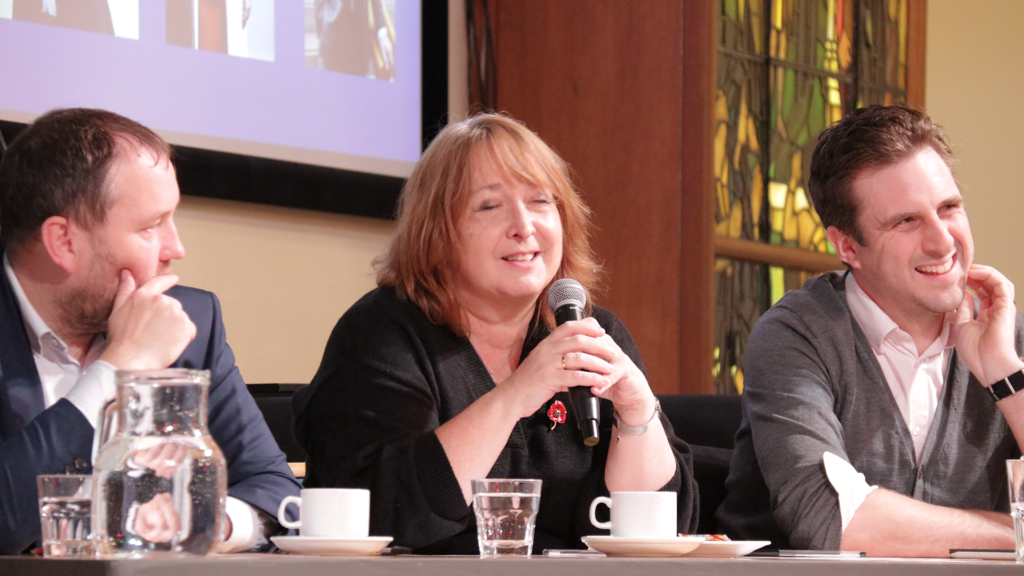
There is a thirst for a better, more positive argument about Scotland and the UK
Asked about the level of the political debate on independence, Ian Murray declared simply: “I’m bored with it”. However, when asked to talk about the case for the UK and how it can be improved, he, his fellow politicians and the room as a whole was bursting with ideas and insights. In short, if the event is anything to go by, there is a real thirst out there for a better way to ‘do’ Scottish politics that decisively breaks from the old stale shouting match of the last decade or so. In the words of one of those present, we need to “create the positive vision – to connect with people, all people so that we can help to build this together.”
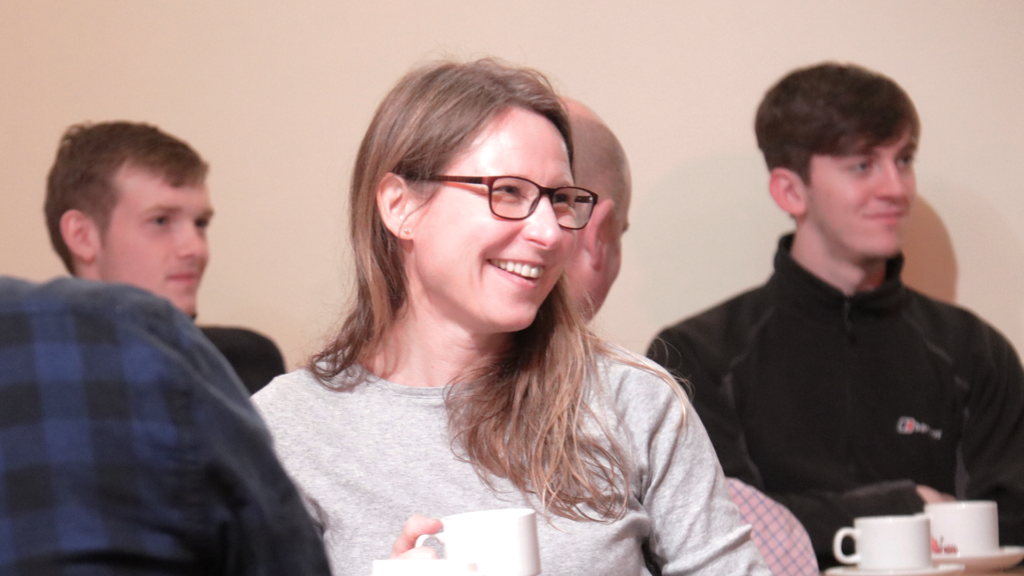
The case for the UK should also be about how we can deliver change, now
Many people noted how, thanks to devolution, Scotland had the powers to deliver radical change on the things we care about most – a fairer society, a greener future, better health (highlighting this is the purpose of our site over at wecan.scot). So the case for the UK, they felt, should lean heavily on the fact we can get on with making change happen, right now. Others noted the positive signs of the UK itself changing – as more powers and money are shifted out of London and into the regions of England. Scotland, it was felt, could make “common cause” with people across England on issues from economic growth to carbon reductions.
“Facts” aren’t enough
The room debated this at some length: some felt that the economic and political facts of independence and the Union were mostly irrelevant in what is often a debate based on emotions and feelings. Others felt that to ignore these facts would be a mistake. But if there was a consensus it was the view that facts can’t do it all – and that people on the side of Scotland remaining in the UK should recognise that the case for the UK also rests on an emotional attachment – and how it isn’t incompatible with a sense of Scottish patriotism and pride.
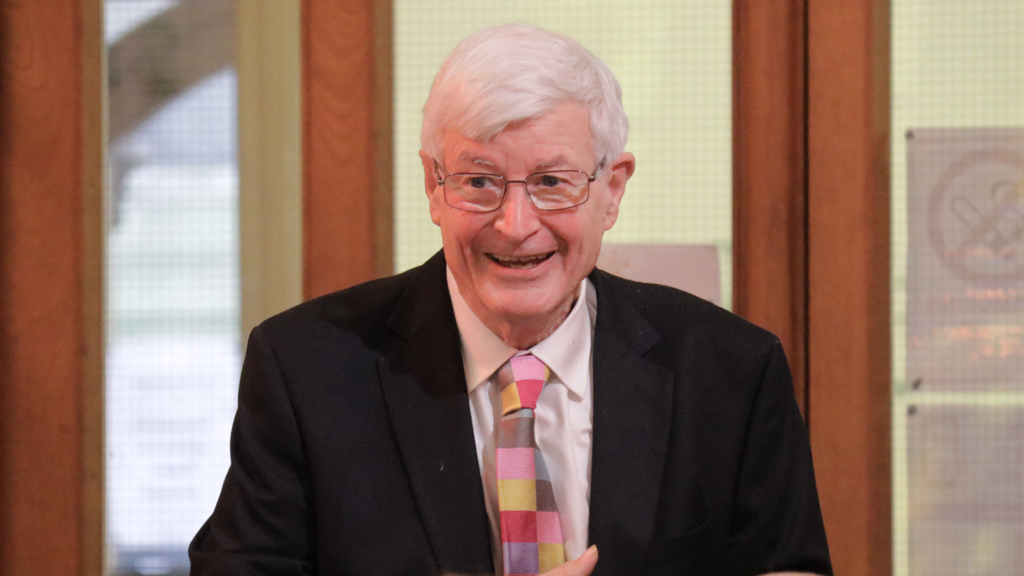
“This was a fantastic event that focussed on the positives – looking at what we can do today in Scotland and across the UK to make a more positive case for cooperation. I have booked myself in for St Andrews already!”
– Robin Harper, Former Leader of the Scottish Greens
It is way past time to listen and understand the concerns and anxieties of pro-independence supporters
As one lady put it, we should start with the distrust felt by many pro-independence Scots towards the UK and then go on to find the common ground and common aspirations we all share. Questioning opponents’ motivations should also be banned – it is time to acknowledge in good faith that people hold different views on the constitution for good reasons. Said one: “We need to listen, acknowledge how other people feel – their anger, distrust and start there. We need to find common ground, common aspirations and vision. Non-confrontational, understanding tone.”
Will leaders please stand up?
Finally, there was a general feeling that the pro-UK side needed a “figurehead”. With little enthusiasm for the current UK Government, many people in the room made the point that there needed to be leaders who were prepared to set out a positive, principled case for the UK.
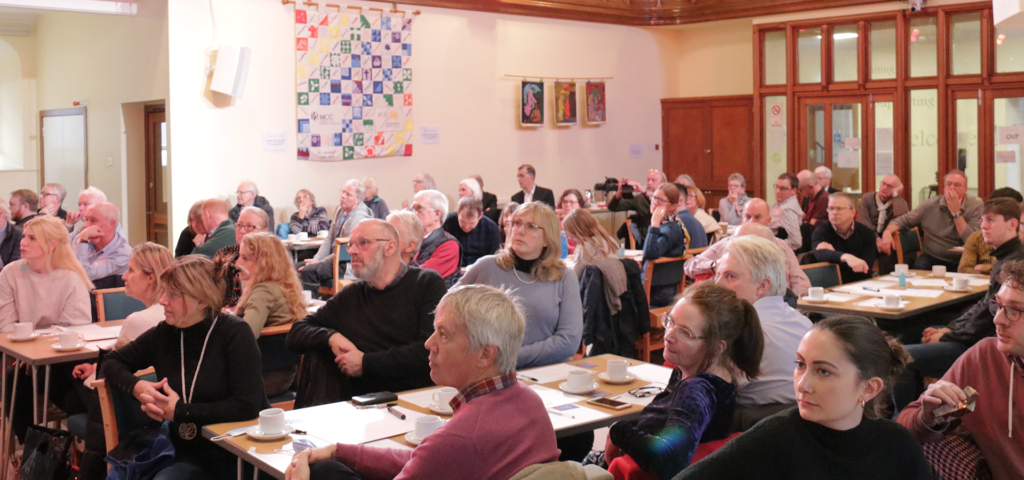
We’re holding more of these discussion events over the winter months – with our next session in St Andrews on December 10th. If the weekend is anything to go by, there is a real appetite for thoughtful, reflective discussion on this subject.
Please join us!
Report Backs A New ‘UK Office of Climate Responsibility’ to End Flatlining Carbon Cuts
Figures show Scottish carbon reductions “stagnating”
A new report by Our Scottish Future calls for the creation of a new green network of UK institutions to cut carbon emissions and warns current targets in Scotland will be missed without urgent action.
Written by sustainability expert Dr Peter Wood, the new paper – entitled “A Net Negative Nation – hitting Scotland’s climate targets” – recommends the UK and devolved governments jointly set up a new ‘Office of Climate Responsibility’ to test every action by government, the private sector and civil society against climate change targets.
Like the Office of Budget Responsibility, it would provide rapid reaction in each parliament of the UK on whether Ministers were living up to green pledges.
The paper also backs a UK wide Agency on Climate Cooperation– chaired by the First Minister of Scotland – to direct investment on the coming green revolution and calls on all Governments to do more to inspire community action, and individual and social activism.
Writing the foreword to the paper, former Scottish Green party leader Robin Harper, the chair of OSF’s Environmental Commission writes: “We need to co-operate rather than compete; we need constructive dialogue; and in the face of the environmental emergency that looms, we should be abandoning the toxic binary politics of today in favour of constructive dialogue.”
The call for a UK wide shake-up follows warnings this week by Chris Stark, chief executive of the Committee on Climate Change (CCC) that targets set by the Scottish Government to slash carbon by 75% of 1990 levels by 2030 are likely to be “enormously challenging” without “deep cooperation with UK policies for decarbonising”.
Today’s OSF report confirms official figures which show that, between 2016 and 2019, the rapid process of decarbonisation in Scotland has stalled.
Scottish Government figures show that in 2016, 48.5 mega-tonnes of Co2 were released into the atmosphere; by 2019, the figure had fallen to just 47.8 mega-tonnes.
The OSF report warns that the 2030 target set by the Scottish Government is implausible on current trends.
It concludes: “The data shows that progress in reducing emissions in most sectors has stagnated. Between 2016 and 2019, the figures have flatlined. This puts the Scottish Government’s target to slash carbon emissions by 75% by 2030 into stark relief. Bluntly, if the figures for 2016-19 are repeated over the coming three years, then the legally-enshrined target set by the Scottish Parliament becomes a practical impossibility.”
The OSF paper says a new Office for Climate Responsibility would be given legal status to ensure all government activity is compliant with net zero timescales. It would also advise on local delivery – such as the reduction in new road building.
The paper also backs the creation of a new UK Agency for Climate Cooperation Acceleration, made up of devolved governments, English regions and the UK Government, to coordinate strategic projects across the country – such as new renewable energy projects, rail network improvements, and reforestation.
And it urges governments to encourage a post-Covid revival of community action across the UK, in supporting voluntary groups to gain valuable skills through restoring community assets and natural heritage sites, or hosting international ‘Attenborough Scholarships’ and exchanges.
In his foreword, Mr Harper adds: “Scotland has been handed the advantage of the biggest wind energy resource in Europe. We have already been criticised – quite rightly – for the absence of meaningful detail and lack of obvious strategies to achieve our other announced targets.
He added: “This report by Peter Wood will help to set us on the right road, opening up a wide range of areas for discussion and the development of common strategies to take us more safely forward”.
Notes
Earlier this week, Mr Stark told the BBC’s Not Hot Air that the Scottish Government’s 75% target was “an enormously challenging target.” He added: “It rests on Scotland doing more and earlier than the rest of the United Kingdom. So far I haven’t seen a strategy from the Scottish Government that would deliver that. It is a very good challenge in the year of COP for the Scottish Government to come up with that but it also rests on deep cooperation with UK policies for decarbonising and I’m afraid that is another area where we are not seeing that kind of coordination.”
Figures for Scottish emissions can be found here.
About the Author
Dr Peter Wood is a sustainability researcher with over ten years experience in policy and behaviour change. He is currently an Associate Lecturer in Environmental Studies, Science and Management at The Open University in Scotland. He lives in Edinburgh.
Four Nations, United by One Healthcare System?
Muir Gray
David Kerr
Introduction
Over the last 18 months, the Covid pandemic has demonstrated the need for an integrated and coordinated approach to healthcare. Across the United Kingdom, the procurement of PPE, the sharing of expertise, the development of diagnostics and the roll-out of the vaccine required health systems to work together in a joint emergency effort. This approach – where successful – is a model for how we should deliver healthcare not just during moments of crisis but as a matter of course. This short paper calls for this model of integration to be applied across the United Kingdom NHS to the benefit of all.

The Development of the NHS
The twentieth century’s healthcare revolution was the based on the rise of bureaucracy and the market. Big bureaucracies such as governments and drug companies, healthcare organisations like hospitals, and markets like the pharmaceutical and diagnostics industries, greatly improved the means of diagnosing and treating disease. Of course, the NHS itself is a testimony to the benefits of bureaucracy, a term which has become negatively associated with inefficiency and bias, in part due to the writings of Franz Kafka and in part due to Jay and Lynn’s Yes Minister. However, bureaucracies are essential for relatively straightforward activities such as the fair and open employment of staff, and the optimal procurement of equipment and maintenance of estate, for example.
An experiment with the market as the primary means of organising healthcare was tried in England in 1990’s, based on the belief that competition could be used to drive up standards, but the 2021 Health White Paper and Bill dismisses the market as a means of coping with the challenges that the NHS faces in the decade to come.
Instead, the White Paper is called Integration and Innovation and uses the term ‘system’ 251 times.
This reflects a growing awareness among students of organisation about the need to build systems to meet complex challenges. The Nobel Prize for Economic Science was jointly awarded in 2008 to Elinor Ostrom and Oliver Williamson. Williamson’s contribution is set out below.
“if the market is a marvel, then why do we need firms? But then the question can be turned around. If internal organisation enjoys advantages over markets, then why is not all production carried out in one big firm?”
Elinor Ostrom focused on culture and emphasised the need for a culture of stewardship writing that
“If those using the resources are allowed to manage those common pooled resources themselves, then sustainability is possible. They become stewards.”
Towards a New UK-Wide Systems Approach to Healthcare
We envisage an interdisciplinary, transnational systems approach to the delivery of healthcare across our NHS, with a system being a set of activities with a single common set of objectives which focusses not on institutions or technologies but on sub-groups of the population with the same need such as people with asthma or people with back pain or people in the last year of life for example. Systems are delivered by networks, defined by us as a geographically disparate group united by their obsessional focus on the common objectives.
The first step is neither to consider nor reinvent (yet again!) the bureaucratic structure of the NHS, but rather the populations whom we serve, as defined by need. For example:
- people with asthma;
- people with back pain;
- people in their last year of life
- people with heart failure
- people with any of the many different types of cancer
- people with diabetes
- people with inflammatory bowel disease
- women with endometriosis
What is needed is a system specification, or contract setting out the aim, the objectives, the criteria that will be used to measure progress or the lack of it, and the standards that should be achieved. Establishing the system specs should give voice to representatives from each of the devolved administrations, unite stakeholder patients, healthcare professionals, policy makers, economists, managers with experience of systems operations, engineers and consider harnessing military logistic expertise. The system should also have a budget bringing together all the little elements of expenditure dotted about in the various bits of structure that deal with, for example, back pain. This emphasises the role of members of the system as stewards. The system should be delivered by networks and the networks should take into account, to use the language of the military, the local history, geography and politics, with the network being the level of operational command, whereas the system is the level of strategic command.
In 2002, John E. Wennberg coined and defined the term ‘unwarranted variation’
as “care that is not consistent with a patient’s preference or related to a patient’s underlying illness”. Data presented in many published articles have shown that considerable variation exists across the United Kingdom in clinical outcomes or rates of treatment that cannot be explained by disease prevalence, evidence-based care or patients’ illnesses and comorbidities. Using systems across all four nations of the United Kingdom permits a deeper understanding of this variation, permits benchmarking of key clinical outcomes and therefore drives an agenda to bridge the ever-widening health equity gap, elevating the least well performing towards the best.
Our NHS has good existing examples of operating systems, particularly for whole population-based services such as immunisation and screening. Breast cancer screening, for example, was based on work led by the University of Edinburgh and adopted using the experience of programmes in Nottingham and Guildford. Since that time twenty-five years ago, all screening programmes have been developed using systems and networks, and so too has the management of many cancers.
Although health is politically devolved, we believe that there are major benefits for all citizens if we could create systems that span the United Kingdom. Indeed the outcomes for asthma should be the same in Manchester, Motherwell, or even Melbourne and Manitoba. Variation in the provision of asthma services and non-compliance with the best available guidelines increases the potential for poor clinical outcomes and waste or resources. For example, it has been estimated that anywhere between 50 and 70% of asthma medications are wasted through lack of effective inhaler technique, putting more pressure on our emergency hospital services. The cost of asthma to the NHS is estimated to be between £1-1.5 billion, but does not exist as a budget that could be deployed as a national asthma service. The benefits of a systems approach are obvious to reduce this massive degree of unwarranted variation – simply by applying the knowledge that we have in a systematic fashion will save lives and money.
We call on the leaders of our NHS to work together to explore the benefits of this integrating approach to improving the delivery of health.
The roll-out of the vaccine demonstrated how a UK wide system and a local delivery plan can combine to provide high quality and equitable outcomes for communities across the country. Few people have had cause to complain either about the standard of service, or about some parts of the country receiving their vaccine later than others.
In real-time, we have seen how it can work. A new integrated approach for many other diseases and symptoms should now be considered by the four nations of the UK to ensure greater quality of healthcare for all.

About the Authors
Sir John Armstrong Muir Gray CBE FRCPSGlas FCLIP is a British physician, who has held senior positions in screening, public health, information management. and value in healthcare. He is currently the Chief Knowledge Officer for EXi, a digital health therapeutic prescribing exercise to people with or at risk of up to 23 long-term health conditions
Professor David James Kerr CBE MA (Oxon) DSc MD FRCP FRCGP FMedSci is a British cancer researcher and clinician who chaired the working group which delivered the ‘Kerr Report’ a 20 year plan for Scotland’s NHS. He is Professor of Cancer Medicine at the University of Oxford.
A Consequential Budget: £8bn of Extra Choice
After 18 months where people have had their wages paid by the chancellor, nobody in Scotland needs any reminder of how important the budget is to our day to day lives. After an extraordinary year the collectively face extraordinary challenges. From the cost of living crisis, funding our public services to saving the planet, now is the time for government action. Many people will be asking how this budget is going to impact themselves, their family and their business.
Continue readingFinding Common Cause: Our Events
In February 2020, we at Our Scottish Future hit upon the great idea of holding a series of public meetings around Scotland to talk about the big questions facing the country’s future, where we would give local people a chance to meet face to face in the same room with one another.
As Mike Tyson said, everybody has a plan until you get punched in the face – or hit by a global pandemic.
But eighteen months on, we are delighted to say that we’re now planning to get things up and running again.
Our inaugural event, entitled “Finding Common Cause” is taking place in Edinburgh on Saturday November 6th. You can get all the details and sign up here.
Despite the intervention of the pandemic, our basic view of Scottish politics has not changed since we first came up with our plans.
We believe that the debate on the union has too often been polarising.
And while this is the preferred option of some, our polling shows that it ignores the views of “middle Scotland” – those thousands of us who would like to see a positive way forward for Scotland and the UK and aren’t wedded to some pre-determined constitutional formula.
Our events, starting in Edinburgh, are designed to provide a forum for those of us who want to act upon this idea, and themselves lead change, now.
These meetings aren’t going to be for everybody. We haven’t bought any flags and we are fantastically uninterested in whatever the latest GERS numbers happen to be. Attendees can be assured we have no plans to explain what “sterlingisation” involves, not least because we’re not entirely sure ourselves.
Instead we’d like to start our own conversation by talking about how to do politics in Scotland better.
Fundamentally, that’s by rejecting the notion that success is a defined by a win-at-all-costs battle to keep the Union together; by the politics of 50.1%.
Rather we want to champion the values of empathy, cooperation and solidarity and campaign for a more inclusive political culture that listens to, and learns from, the perspective that pro-independence supporters voters provide.
We have some interesting and unusual guests coming along to provide their own perspective on all of this.
And even if you’ve had no previous engagement with politics, that is no reason not to turn up.
It’ll be a great opportunity to meet other interested and interesting people and to begin a more fruitful conversation about the way forward for Scotland.
If you can’t join us in person, we will also be hosting a series of online events – please register your interest here. We look forward to seeing you in Edinburgh on the 6th, or at an event near you soon.